

Socio-Labor Arraigo in Spain: When Your Work Counts Too.

Have you been working in Spain for years without papers?

Reunión de asesoría con una clienta y dos asesores en una oficina de Barcelona

Rubén's story: from the shadows to residency

Rubén had done it all.
Jobs in construction, moving, warehouses. Always in the shadows.

“He lived in fear of being stopped on the street.
He'd been in Spain for two years, but nothing was official.
Until one day, he was offered a legal contract.”

He didn't know it, but that, together with the time he'd been living in Spain, could change everything.
It was time to apply for socio-labor arraigo (residence based on ties to Spain).

What is socio-labor arraigo?

Socio-labor arraigo is a temporary residence permit granted on the basis of exceptional circumstances.

It is designed for foreign nationals who:

  • Have been in Spain for at least 2 years
  • Do not have legal residence, but have worked or have a job offer
  • Have no criminal record
  • Can demonstrate their integration into the country

It is regulated in Article 127(b) of the Immigration Regulation, as amended by Royal Decree 1155/2024:
https://www.boe.es/buscar/act.php?id=BOE-A-2024-24099

What do I need to apply?

You must meet three main requirements:

1.Continuous residence in Spain
At least 2 consecutive years, with absences totaling no more than 90 days.
2.Employment contract or contracts

A current job offer or previous work (you can submit previous contracts if you have proof).

3. Contract conditions

List

    • Minimum hours: 20 hours per week
    • Duration: permanent or fixed-term (minimum 90 days)
    • Salary: at or above Spain's minimum wage (SMI)
    • Employer up to date with the Tax Agency and Social Security

Can I submit more than one contract?

Yes. You can submit more than one contract in these cases:

  • Seasonal work (for example, agriculture, events, hospitality)
  • Simultaneous part-time jobs (hourly, with different employers)

What matters is that your combined hours and salary meet the legal minimums.

Where do I apply, and what documents do I need?

You must submit your application to the Immigration Office (Oficina de Extranjería) in the province where you live.

Required documents:

List

  • Complete passport (all pages)
  • Municipal registration (empadronamiento)
  • Proof of your stay in Spain (medical appointments, purchases, certificates)
  • Current or previous contract
  • Criminal record certificate from your home country
  • Employer's statement (if it is a future contract)
  • Fee: form 790, code 052

More official details here: https://www.inclusion.gob.es/

When can you start working?

Once your application is admitted for processing, you can start working legally.
You don't need to wait for the final decision.

That said, it's essential that the contract remains valid throughout the process.

Rubén's transformation

Today Rubén has his NIE (Foreigner Identity Number).
He works legally, pays into Social Security and no longer lives in fear.

What once seemed invisible —his hard work— became his greatest legal strength.
And like him, many people already meet the requirements but don't know it yet.

What about you? Could you qualify for socio-labor arraigo?

If you've been in Spain for at least 2 years and have a job offer, it's very likely you do.

At Gestionamos Tus Trámites, we help you:

  • Check whether you meet the requirements
  • Prepare your documents step by step
  • Avoid mistakes that could delay your application or get it rejected
  • Submit your application with legal backing

Book your free consultation

Don't let your hard work go unrecognized.
Book a free consultation and start your path to legal residence.

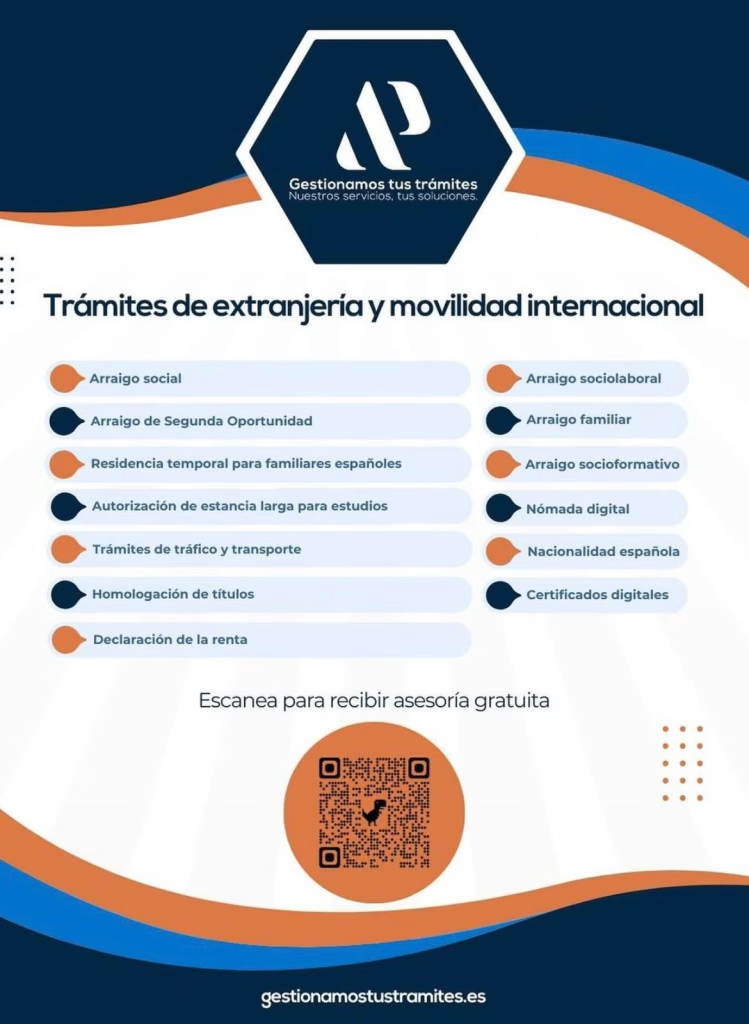
Cartel de servicios de extranjería de Gestionamos Tus Trámites: arraigo, autorizaciones de residencia, nacionalidad y canje de carné
Listado de trámites de extranjería y movilidad internacional de Gestionamos Tus Trámites con código QR

Socio-Labor Arraigo in Spain: When Your Work Counts Too.

Have you taken on tough jobs, with long hours and unfair conditions?
Believe it or not, all that effort could help you regularize your status.
Thanks to Spain's new Immigration Regulation, your work experience can become your strongest legal argument.
That's exactly what Rubén did.
And now we'll tell you how.

Read More »